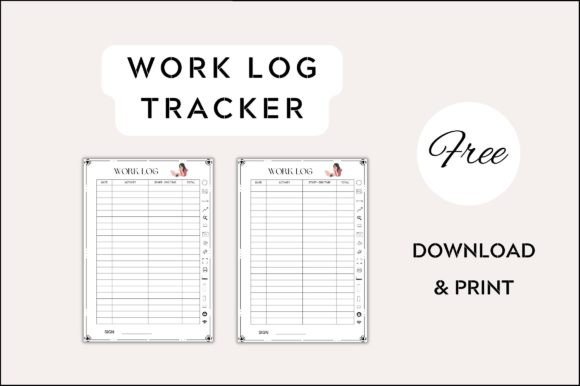
Work Log Tracker: Streamline Your Design Workflow
In the fast-paced world of creative production, meticulous time management and project documentation are the bedrock of a successful design career. A dedicated Work Log Tracker is more than a simple timesheet; it’s a fundamental tool for understanding your creative process, optimizing efficiency, and ensuring every project receives the focused attention it deserves. For designers, marketers, and business owners, this simple resource transforms chaotic workflows into a clear, actionable record of effort and output.
The Visual Designer’s Productivity Engine
From a professional graphic design perspective, a well-structured Work Log Tracker serves as the central nervous system for your projects. It provides the data needed to make informed decisions about pricing, resource allocation, and creative direction. By meticulously logging hours spent on ideation, revisions, client communication, and final execution, you gain invaluable insights into your most time-intensive tasks. This clarity allows you to refine your design workflow, set realistic timelines, and communicate more effectively with clients about project scope and deliverables.
Practical Applications Across Creative Fields
The utility of a robust work log extends far beyond personal timekeeping. It becomes a critical component in several key areas of creative business:
- Branding & Logo Design: Track the hours dedicated to research, mood boarding, sketching, and vector refinement. This data helps justify your pricing and demonstrates the strategic thinking behind a brand identity.
- Marketing & Social Media: Log time spent creating campaign assets, designing social media graphics, and analyzing performance. This informs the ROI of your creative efforts and helps plan future content calendars.
- UI/UX & Web Design: Document hours for wireframing, prototyping, user testing, and visual design. A detailed log is essential for Agile sprints and justifying development timelines to stakeholders.
- Packaging & Editorial Design: Keep a precise record of iterations, material research, and pre-press preparation. This is crucial for complex projects where multiple rounds of revisions are common.
- Client Presentations & Proposals: Use historical log data to create accurate project estimates and detailed proposals, building trust and transparency with clients from the outset.
Integrating the Tracker into Your Design System
For maximum impact, your Work Log Tracker should feel like a natural extension of your existing tools. Consider these tips for selection and implementation:
- Prioritize Clarity and Usability: Choose a template with a clean layout and intuitive visual hierarchy. You should be able to log an entry in seconds without disrupting your creative flow.
- Ensure Brand Consistency: Opt for a customizable template that allows you to incorporate your own color palette and typography. A tracker that aligns with your brand identity feels more professional and integrated.
- Focus on Scalability: Whether you prefer a printable A4 sheet for your desk or a digital format, ensure it can handle projects of varying complexity, from a quick social media graphic to a full-scale packaging design project.
- Leverage Pre-Built Efficiency: Utilizing a ready-made digital download saves priceless hours that would otherwise be spent building a system from scratch. Simply download, print, or import, and begin tracking immediately.
Ultimately, the choice to implement a structured tracking system reflects a commitment to professional growth and operational excellence. A thoughtfully designed Work Log Tracker is a small investment that yields significant returns in productivity, profitability, and peace of mind. It empowers you to focus on what you do best—creating compelling visual solutions—while the data works quietly in the background, guiding your business decisions and elevating your creative practice.